Lampshades for standing and hanging lamps have definitely gained popularity in recent years. We must not forget about small lampshades for wall lamps, which give a cozy effect in many interiors. Both small and large lamp shades give the interior coziness in the form of atmospheric light, thanks to which they find themselves in many homes. Most often, when we think of this type of lighting, we imagine fabric lampshades, but this is only one of the possibilities. Discover the different materials from which we can create atmospheric lampshades for lamps.
Types of lampshades for lamps pt. 2 – materials for lampshades
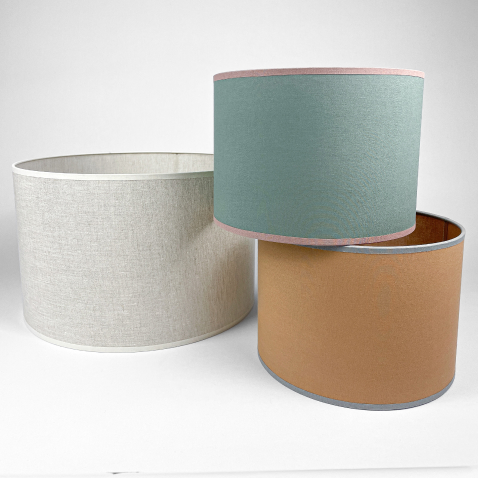
Fabric lampshades
We must start this list with fabrics - the most popular materials for creating lampshades. This is the most classic and at the same time the most universal form of lampshades. The combination of a stiffening foil and any fabric softens the light, introducing a pleasant atmosphere to any interior. At the same time, fabrics offer the most possibilities and variety. Lampshades made of textile materials can be made of many types. Velor lampshades and linen lampshades are very popular. Cotton lampshades are also an absolute classic that will work in any interior. However, nothing stands in the way of creating lampshades from thickly woven fabrics, bouclé from loop yarn, or thicker materials with longer pile. On the other hand, more delicate fabrics, such as silk, can also be used for lampshades.Paper lampshades
An interesting example of lighting elements are paper lampshades. Most often these are lampshades made of parchment, which in their form resemble paper lanterns. Paper lampshades can also be made using the origami technique. These types of paper lampshades are made of thicker materials than parchment and create beautiful, spatial compositions. Another example are pleated paper lampshades, to which the irregular surface gives a very interesting, delicate effect.Wickes lampshades
Wicker, in addition to the classic material for woven baskets, is also a great material for creating original lampshades. Wicker twigs, i.e. young shoots of various willow species that have undergone special treatment, will be an extraordinary element of lighting. A wicker lampshade can take various shapes - from classic cones to geometric forms. It is an ideal proposition for interiors in a rustic style, because the wicker lampshade will always bring coziness and warmth to the interior. It is also worth noting that the wicker lampshades provide a very interesting, atmospheric light. Wicker twigs do not let the light through, while the gaps between them do, thanks to which the light creates an atmospheric pattern.Rattan lampshades
Another example of braids that can be used to create lampshades is rattan. While wicker is made from willow shoots, rattan is made from vines of selected palm species that do not occur in the European region. Apart from that, we can talk about many similarities. Rattan lampshades can also take various shapes. The rattan cone lampshade is a classic, often found shape, but braids of this type can also be used to create lampshades of very complex forms. Climate rattan lamps will also bring a cozy atmosphere to the interior, but the pattern of light passing through the lampshade will be different from that of wicker lampshades. It's still a very atmospheric lighting though.Macrame lampshades - string lampshades
Staying with mood lighting, we should also mention lampshades made of string. The art of macramé, so popular recently, is used not only in decorative accessories, but also in the form of braided lampshades. Macrame weaves give almost unlimited possibilities of creating lampshades from a string. Braided lampshades are great for boho-style interiors.Wooden lampshades
And finally… wood! Wooden lampshades can be both made entirely of wood, as well as combine various elements, e.g. fabric and wood. Due to the fact that wood can be found in any style of interior design, wooden lampshades can be designed similarly in any style. Wooden lampshades are most often made of veneer, but it is also a great idea to use solid wood elements, such as decorative beads.The availability of various materials on the market is huge - from fabrics to interesting braids, which gives many possibilities to create lampshades. In addition, it is worth following current trends and new products, because interesting, new materials are created every day. A creative approach to the design of lampshades and the use of this benefit is crucial and allows you to create original lighting elements.We encourage you to read our series of blog posts, presenting all aspects of creating and designing lampshades: