In previous blog posts, we have already talked about the basic aspects of designing and creating lampshades for lamps. The first, key decision made before creating lampshades for lamps is their choice of their shape. Another aspect is the choice of material from which they will be made. However, lampshades are not only about shape and material. Selected finishing details give the overall effect. It is the details that have the final impact on the perfect match of the lampshade to the lamp. In the following entry, we have presented the most commonly used lampshade finishes.
Types of lampshades for lamps pt. 3 – lampshade finishing details

Types of material connections in lampshades
The main component of the lampshade is a piece of material (e.g. fabric with foil or natural braid) of the appropriate shape. When creating lampshades for lamps in a selected shape, connect the ends of the pattern and embed stiffening frames. We can distinguish two types of classic lampshades. When choosing the type of connection in the designed lampshade, it should be matched to the material from which it will be created.Lampshades with stitching
The first example of an aesthetic finish of the pattern connection point is the stitching. The ends of the material are sewn with a thread matching the color of the material for the lampshade. Such a finish is characterized not only by durability, but also by timeless aesthetics. In addition, it is a type of connection that looks good with any type of material used. The right thread color match can also emphasize the more raw or rustic character of lampshades made of natural fabrics. A great example are linen lampshades for lamps, in which this type of finish is great. It is worth remembering that sewing may be the only way to connect the material in the lampshades, depending on the material used. Sewing the ends of the pattern is necessary, e.g. in lampshades made of fabric with longer pile. On the other hand, the sewing method will not work in lampshades made of spatial materials, e.g. lampshades made of wicker with a thick weave.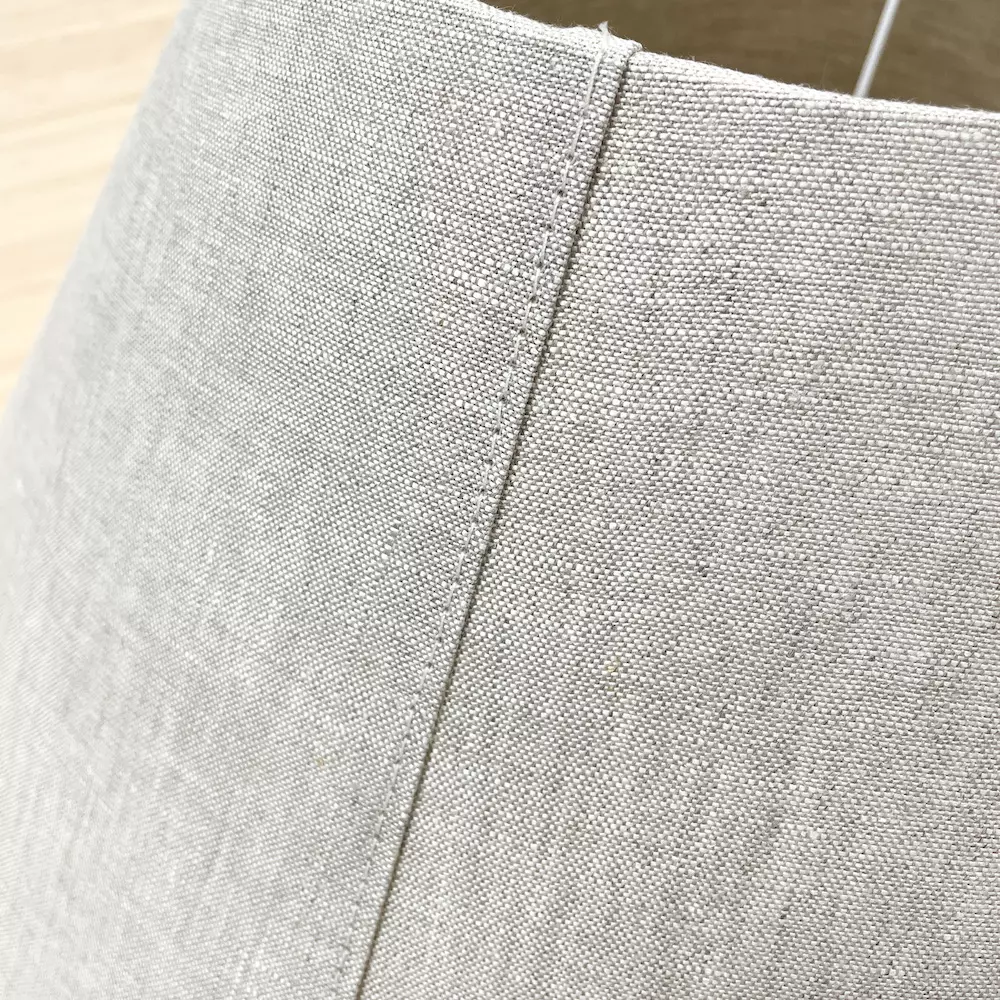
Linen lampshade with material connection by stitching
Lampshades without stitching
The second possibility of binding the ends of the pattern into the form of a lampshade is gluing it together, without stitching. For this purpose, various forms of gluing are used, adapted to the type of material used for the lampshade. Such lampshades look more delicate, which is important in the case of some materials. A good example of this type of connection are lampshades made of wallpaper, like the one shown in the photo below. Wallpaper lampshades are extremely effective, but combining the wallpaper pattern as it is when putting it on the wall is not always possible. Gluing the pattern to the form of the lampshade does not emphasize any differences in the pattern and allows you to maintain consistency. In addition, this solution will work wherever it is not possible to sew the ends of the material, e.g. in lampshades made of thick braid. On the other hand, gluing the edges is not possible in lampshades made of fabrics with longer pile.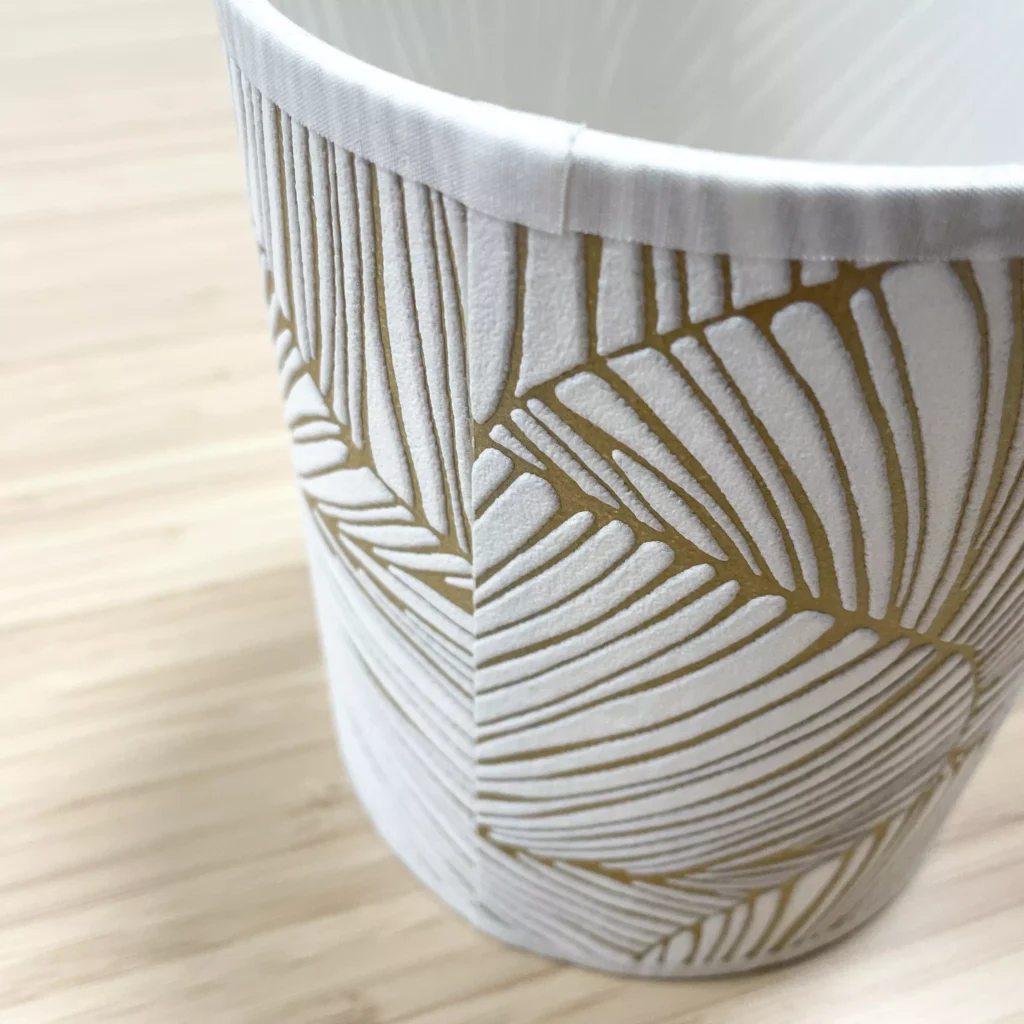
Wallpaper lampshade with binding without stitching
Lampshades with an aesthetic edge
After selecting the aesthetic connection of the ends of the lampshade pattern, pay attention to the upper and lower edges. Some materials do not require any additional finishing in these places. Among them, one can distinguish e.g. wicker lampshades and wood lampshades. Most lampshades, however, require additional finishing at the edges. This is especially important in the case of fabric lampshades stiffened with foil, which are the most frequently chosen variant. The available finishes mask both the edge of the material and the metal frame that is part of the lampshade.Lampshade with trimming
One of the most common finishes for the edges of lampshades are trimmings and finishing tapes. The first solution is lampshades finished with finishinh tape in a shade matched to the material used. The lampshade finished in this way is a great, neutral base that will be a delicate accent in any lamp. The timeless design that we all come across most often is white lampshades with white trimming. The second option is lampshades finished with trim in a contrasting shade. This solution allows you to create many unusual combinations. A very elegant example is the black and white lampshades, which combine a white fabric with a black trim on the edge of the lampshade. In addition, the trim in the form of a lampshade finish is also a great idea to introduce color to the lampshade in the base color. Of course, nothing stands in the way of emphasizing a colorful lampshade with a strong color of the trimming. We are only limited by our imagination!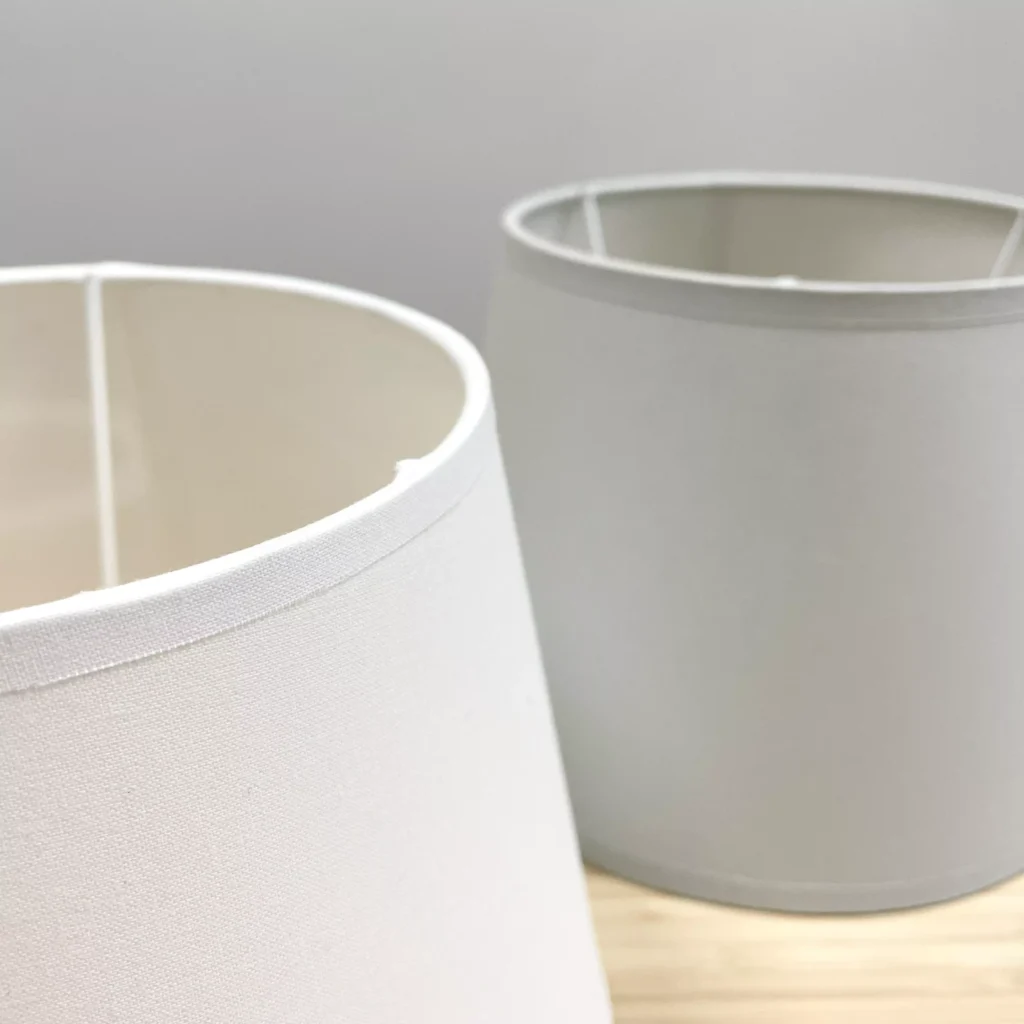 Lampshades with finishing tape in a matching shade.
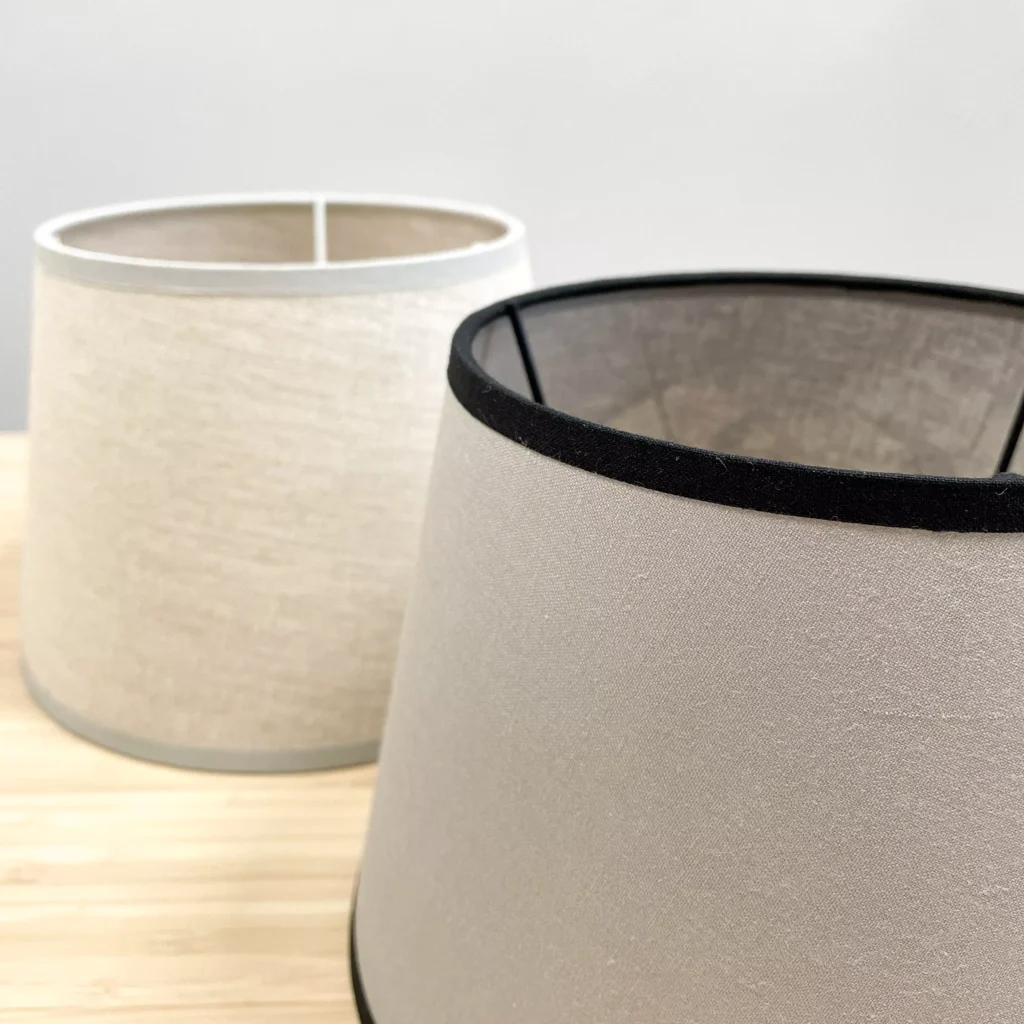
Lampshades with finishing tape in a contrasting color.
Lampshade with folded fabric edge
The use of a selected finishing tapes is not the only solution that allows you to finish the lampshade. The second option is to wrap the edge of the fabric inside the lampshade. For this purpose, we prepare a special pattern with excess fabric, which allows you to wrap it around a metal frame. This solution is more time-consuming, but it gives the effect of continuity of the fabric from which the lampshade was made. The final effect is delicate and very consistent. Folding the edge of the fabric in the lampshade works especially well with lampshades with a strong pattern. In such products, adding a hem could create an impression of disorder, while the continuity of the fabric gives the impression of harmony. It is also worth noting that in some cases this is the only possible solution. A good example are fabrics with a strong structure (e.g. boucle lampshades), in which there is no possibility of gluing the finishing tapes.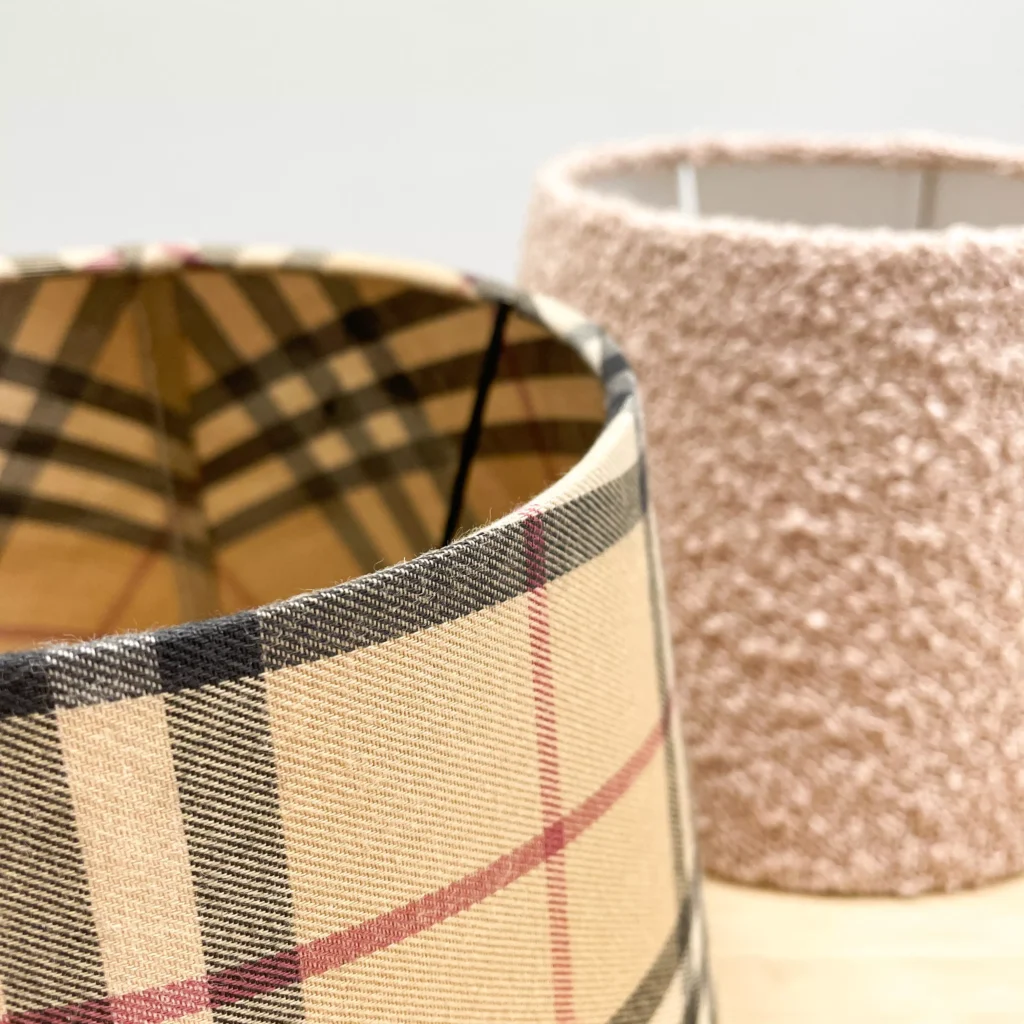
Lampshades with a folded fabric edge.
Does the detail in the lampshades really matter?
Of course! It happens that we see lampshades from a distance, e.g. in lamps hanging in high rooms. On the other hand, they appear much more often at the level of our eyesight as lampshades for standing lamps. The type of finish has a huge impact on the overall perception - not only of the lampshade, but also of the lamp it will complement. We hope that the types of finishes presented by us will help you decide on the perfect lampshade. We emphasize, however, that the variety of possibilities for creating lampshades is huge. Depending on the material used, we also look for new finishing solutions, if needed.We encourage you to read our series of blog posts, presenting all aspects of creating and designing lampshades: